Endoscopy Unit
Information for Patients
Introduction
If you are going to have a test called an endoscopy to look inside your bowel, you will need to stop eating (fast) for a while. This can make your blood sugar (glucose) levels drop
If you have diabetes and take medicine for it, you will need to change this according to the timing of your appointment to avoid having a ‘hypo’ (low blood sugar). This leaflet will help you to manage your diabetes to keep your blood sugar safe (between 4 and 11mmol/L).
Changing you medicine may upset your blood sugar levels. This should return to normal within 1 or 2 days after your procedure.
Please read the right instructions in this leaflet, depending on the type of medication you take:
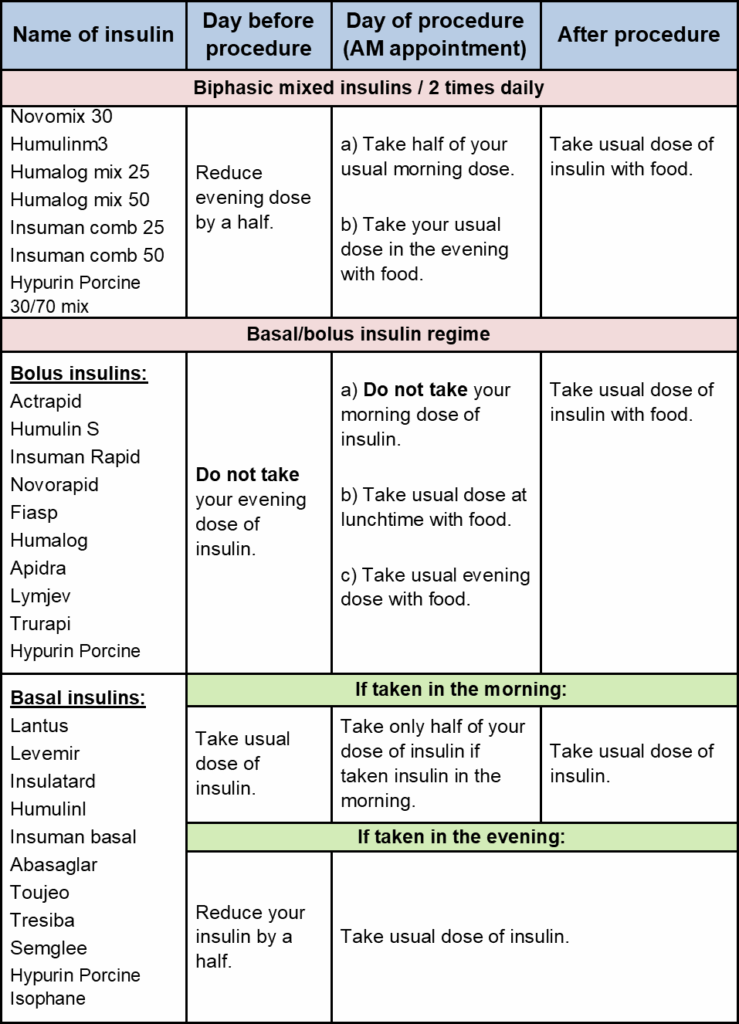
- Follow the advice in section 1 if you are only take insulin
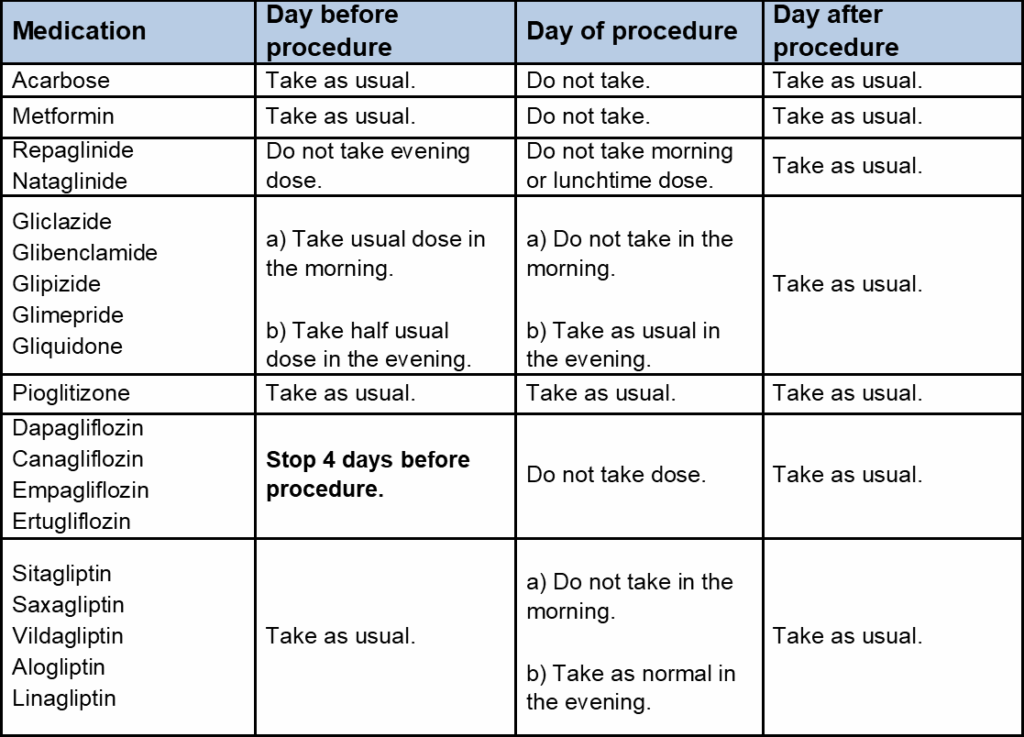
- Follow the advice in section 2 if you only take tablets, or non-insulin injections
- Follow the advice in sections 1 and 2 if you take a mix of insulin, tablets or any other injections
If you have any questions about managing your diabetes for the test, please contact your usual diabetes care provider.
Please also read the instructions on taking the bowel preparation solution in your appointment pack.
Day before your procedure
- Have breakfast. Keep to the low residue diet that you are on. Please try and include white bread or white boiled rice with this meal.
- Stop eating food after 3 pm the day before your procedure. See the bowel preparation solution sheet for when to stop. Drink lots of clear fluids like water, tea without milk. Follow the instructions on the accompanying bowel preparation solution sheet in your appointment pack.
- Check your blood sugar levels on a regular basis.
- You should have sugary drinks, if needed, to treat or avoid a ‘hypo’.
Monitoring your blood sugar and treating a hypo
Hypoglycaemia (also known as a “hypo”) is when your blood sugar level falls too low. A blood sugar (glucose) below 4.0 mmol/L should be treated.
When you are on diabetes medication, a long period of fasting can make you more likely to get low blood sugar levels. Symptoms of hypoglycaemia include:
- blurred vision
- sweating a lot
- feeling anxious or angry
- tingling in mouth or fingers
- fast or heavy heartbeat
- odd behaviour (usually noticed by another person)
- trouble concentrating
It is important to check your blood sugar levels more often over this time (every 2 hours if you are worried).
What to do if you have a hypo whilst fasting
If your blood sugar is under 4.0 mmol/L, you must break your fast. Have 2 to 5 glucose tablets.
Check your blood sugar level every hour, until your test. If during your hourly checks your blood sugar drops again below 4.0 mmol/L, you can take another glucose tablet.
If you have a hypo whilst preparing for your procedure, tell the staff when you arrive so we can monitor you more closely.
Section 1 – For patients taking insulin only
Section 2 – For patients taking tablets, or GLP-1 medicine or injections, for diabetes control
If you are taking tablets that are not mentioned here, please get medical advice from your usual diabetes care provider.